Week 2
Readings:
Regardless of going to art school, I never became familiar with the idea of using sketching as a thinking tool. I always saw it strictly as a tool for drawing. After these readings, however, I do want to start using sketching as a way to better understand my own thinking process. Words can only take me so far. Don’t get me wrong, words are beautiful, and I will still use them a lot, but now I feel more open to using both sketching and writing. I don’t think they are enemies; instead, they can go hand in hand. As we use both, I almost feel like one can’t exist without the other.
The part that resonated with me the most was the idea that there are drawings we don’t need to judge based on how they look, because their purpose is not beauty or artistic quality. Instead, their purpose can simply be to express an idea in a quick but intentional way. This changed the way I think about sketching because I’ve always associated drawing with the pressure of making something look good. These readings made me realize that a sketch can have value simply because it helps me understand, explore, or communicate what I am thinking. This idea of sketching as part of the thinking process, rather than only as a final visual result, is something I want to incorporate more into my own creative process.
How can we become less judgmental of our own thinking process so that we can express and explore ideas more freely?
Video:
Understanding sketching better, especially the different uses and “levels” of sketching, has changed the way I think about it. Before, I mostly saw sketching as a way to represent an artistic idea visually, but now I see that it can also be a way to express, explore, and problem-solve. A sketch does not always need to be a finished drawing or even something that looks “good.” Sometimes, its purpose is simply to help us understand what we are thinking.
I also found it interesting how the professor explained the different ways academics have interpreted and categorized sketching. It made me realize that there is not necessarily one single way to define what a sketch is or what it should accomplish. We can continue interpreting and using sketching differently depending on what we are trying to understand or communicate.
For me, sketching is becoming more than just an artistic tool. I am starting to see it as a way to understand and interpret our ideas, and possibly even our feelings. Sometimes an idea can be difficult to fully explain through words, and sketching gives us another way to explore what is happening in our minds.
Process Book - 50 Shades
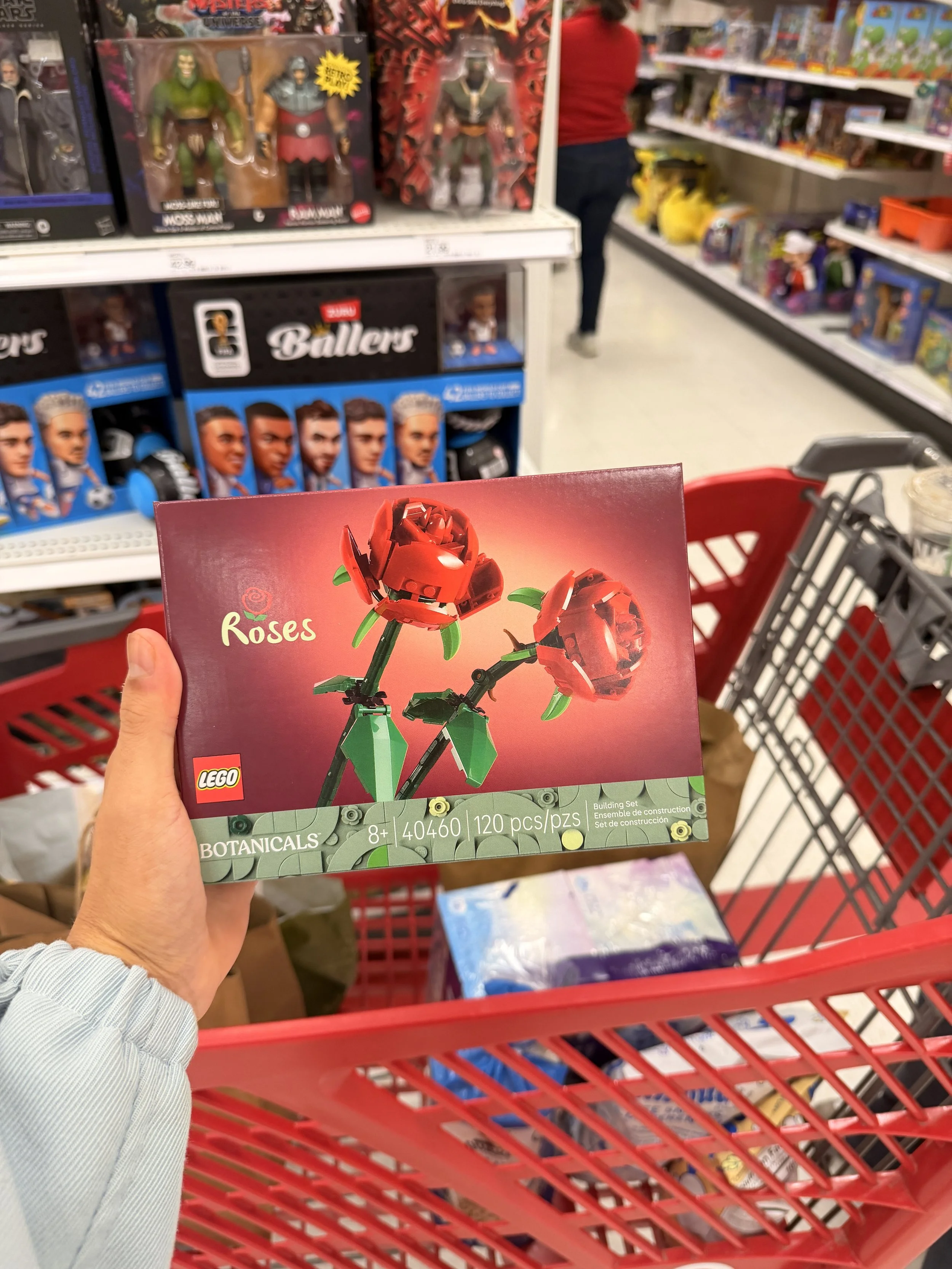
1. Selecting the Object
Selecting the object was probably the part that took me the longest at the beginning. I had to decide what I wanted to iterate 50 times while still making each iteration different and interesting. During class, our professor mentioned that no one had really explored sound yet and that it could be interesting to see someone approach the assignment through audio. After thinking about that idea, I decided to work with LEGO and create 50 different LEGO sound effects. Once I committed to the idea, I purchased a LEGO set specifically to use for my recordings.
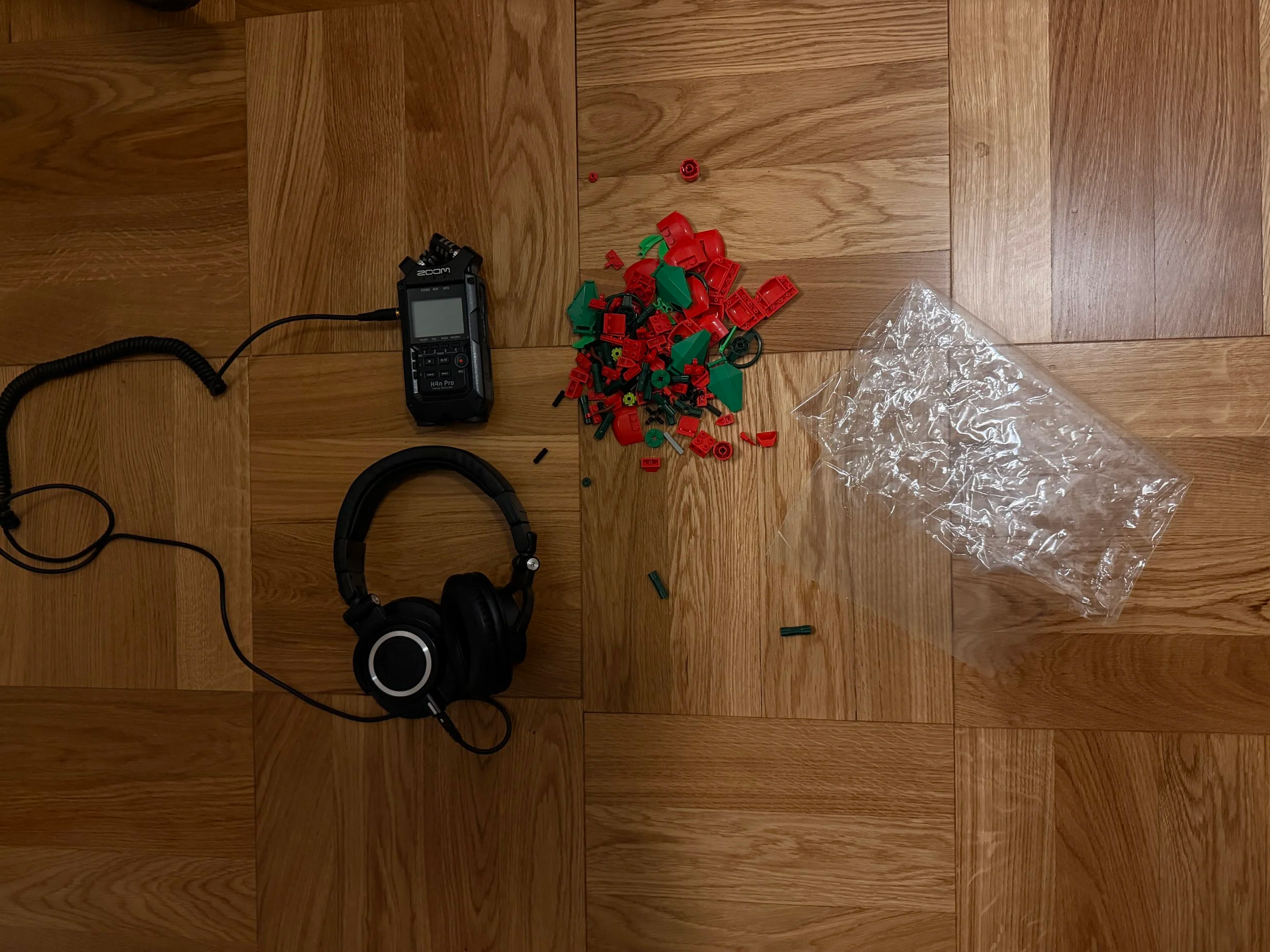
2. Recording the Sounds
The recording process was probably the most fun part of the project because I could experiment with the LEGO pieces in many different ways. I didn't want all 50 sounds to simply be LEGO pieces dropping or moving, so I started combining them with other objects and materials. I used cups, plastic bags, slime, different surfaces, and other objects to create different textures and interactions. Experimenting with these combinations helped me discover sounds that I would not have expected from LEGO alone and gave me a lot more variety for the final collection.
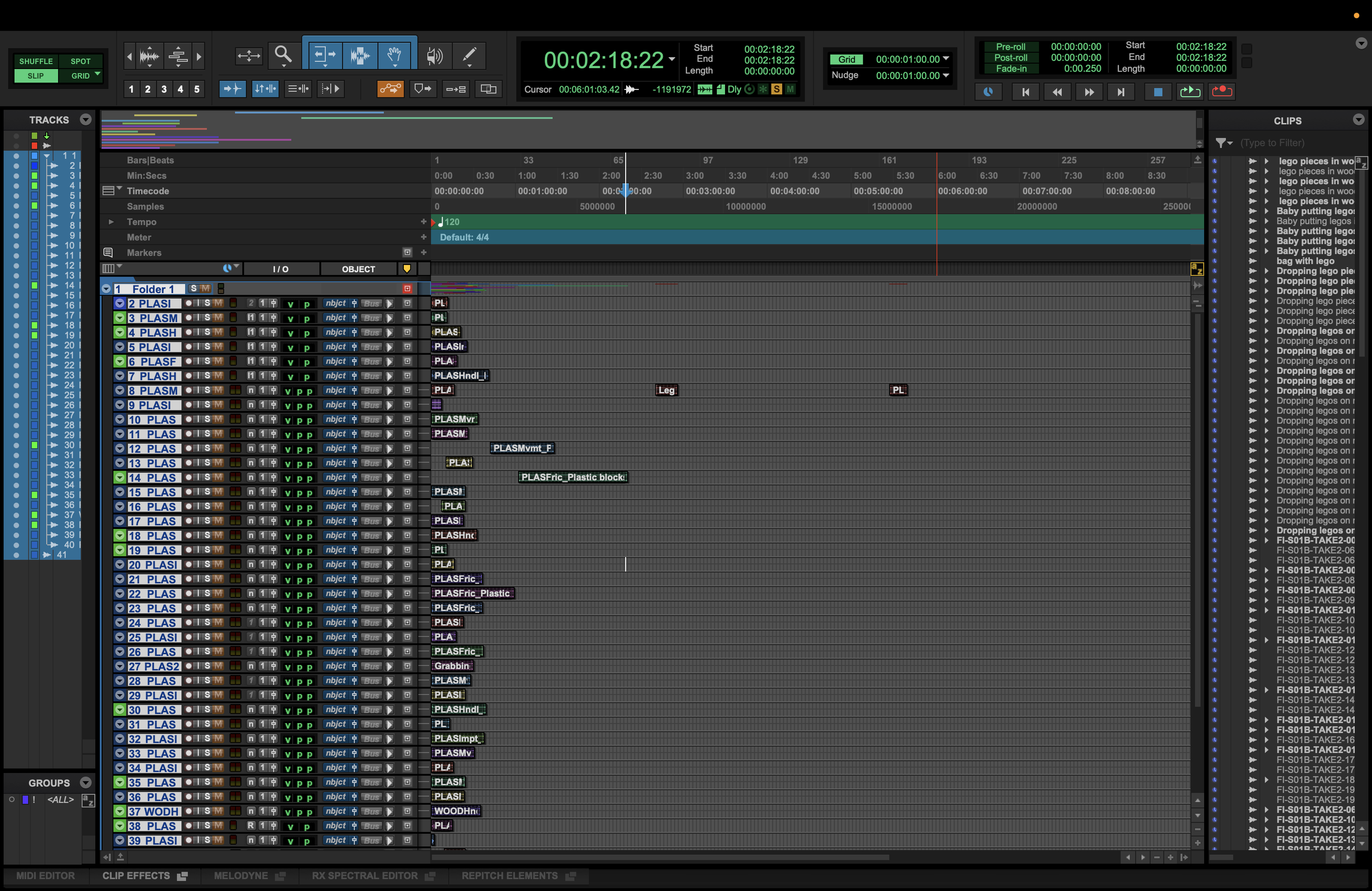
3. Editing and Renaming
Editing and organizing the recordings was the part that took me the longest overall. I had to go through all of the recordings, select the best moments, edit them, and then export and rename each individual sound effect. For the naming process, I decided to follow a universal sound-effects naming convention. I knew this was not required for the assignment, but I wanted to treat the sounds as if they were part of a professional sound library. I also thought it would be good practice for the future, especially if I ever want to reuse these sounds or make them available for someone else to use.
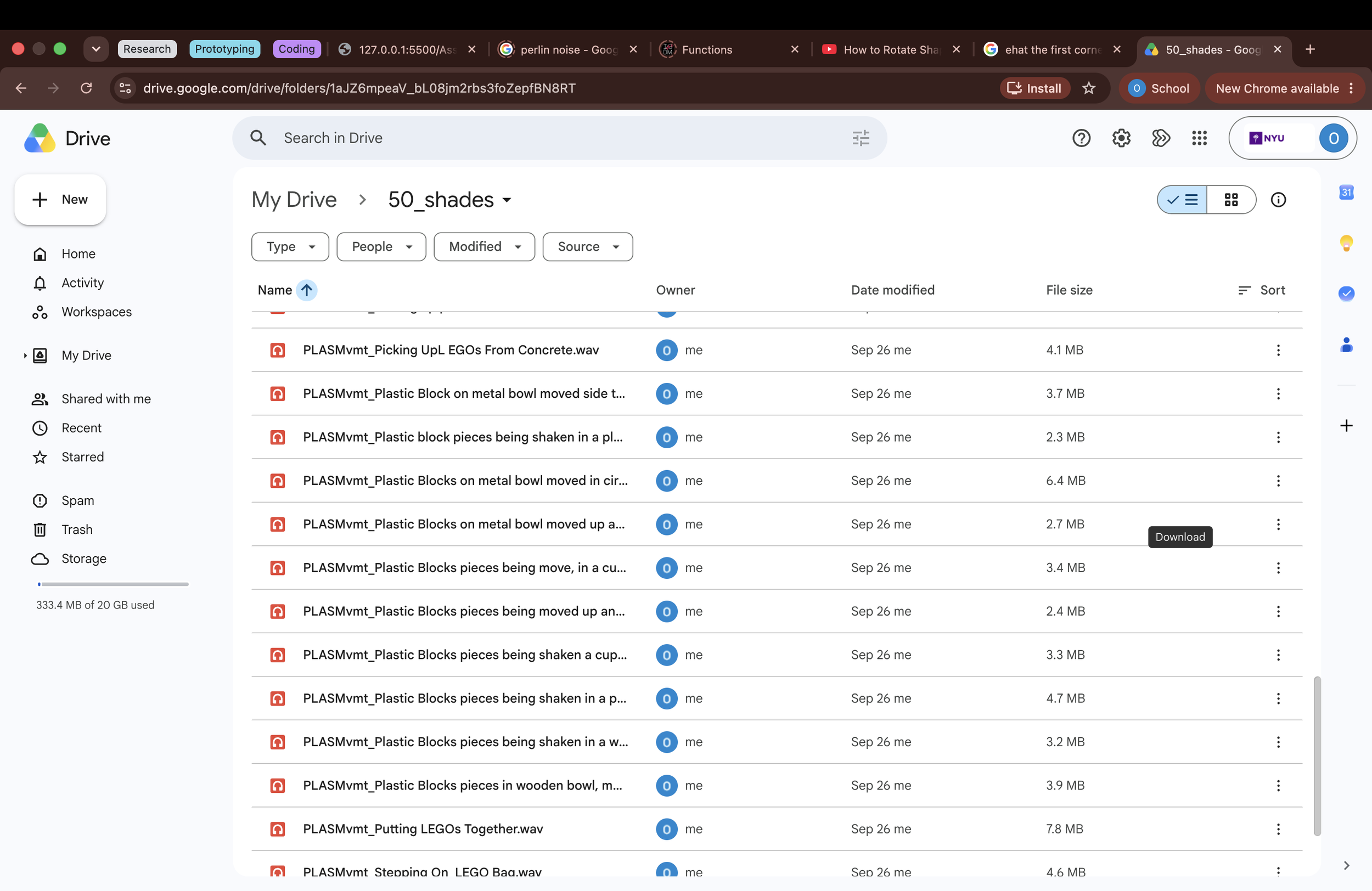
4. Delivery
The final step was organizing and delivering all 50 sound effects. After finishing the edits and making sure the files were properly named, I uploaded the complete collection to Dropbox. I organized everything so that my professor could easily access the folder, review the recordings, and go through the different sounds. This final step made the project feel less like a collection of individual experiments and more like a small, organized sound-effects library.
Link for Sound Library
https://drive.google.com/drive/folders/1aJZ6mpeaV_bL08jm2rbs3foZepfBN8RT?usp=drive_link
